HelioLiver™ LDT — Detect Liver Cancer Earlier with a Simple Blood Test
HelioLiver LDT is a multi-analyte blood test designed to help detect hepatocellular carcinoma (HCC) in high-risk patients, including people with cirrhosis or chronic hepatitis B. In the CLiMB trial, HelioLiver detected Stage I liver cancer four times more often than ultrasound.
Validated in the CLiMB Trial Published in the Journal of Hepatology Available through Quest Diagnostics
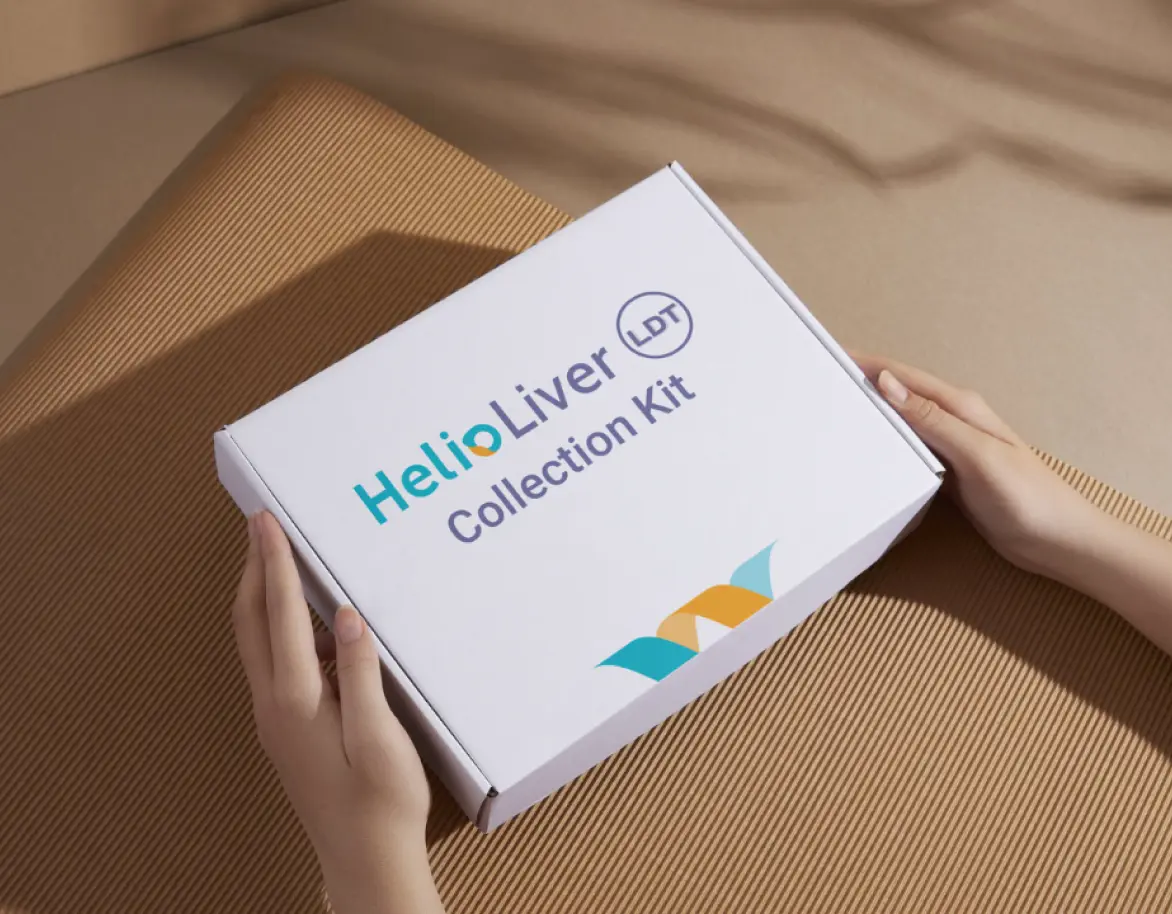
Collection Kit
4×more Stage I cancers vs. ultrasound
10–14day average turnaround
01
What is HelioLiver LDT
A Breakthrough in Liver Cancer Testing
HelioLiver LDT is a blood-based test for early liver cancer detection. It combines cfDNA methylation, protein tumour markers, and clinical information to help identify HCC earlier in high-risk patients. The test is designed to fit into routine surveillance workflows and provide a simpler path to earlier answers.
Reads cancer-related DNA changes circulating in the blood.
Protein tumour markers
Adds a second layer of signal alongside the methylation data.
Clinical context
Bring both together for a clear result in high-risk patients.
One clear HelioLiver result
AI brings every signal together into a single Normal or Abnormal report on the likelihood of HCC.
Normal · Abnormal
02
Clinical Evidence
Higher Sensitivity for Earlier Detection
HelioLiver LDT combines cfDNA methylation testing with protein tumour markers to detect liver cancer earlier than ultrasound, the current standard of care, especially the small, early-stage lesions that are hardest to catch.
Stage I HCC detection
HelioLiver44%
Ultrasound11%
Sensitivity for lesions under 2cm
HelioLiver29%
Ultrasound0%
10–14 days
average turnaround time from sample to report
From the CLiMB trial — a prospective, blinded, multicenter US study in patients with cirrhosis. Published in the Journal of Hepatology, May 2026.
HelioLiver LDT can support liver cancer screening and HCC surveillance in high-risk patients. It uses a simple blood draw and fits existing office workflows. Ordering support is available for provider offices.
If you have cirrhosis or another liver cancer risk factor, ask your doctor about HelioLiver LDT. Risk factors can include chronic hepatitis B, hepatitis C, alcohol-related liver disease, and NAFLD.
Liver cancer is often diagnosed late, when treatment options are more limited. Finding HCC earlier can expand the range of therapies and improve the chance of better outcomes.
Early-stage (localised) HCC — curative options may include resection, transplant, or localised therapy.
Advanced-stage (distant) HCC — treatment often focuses on systemic therapy and symptom management.
If you have cirrhosis, chronic hepatitis B or C, heavy alcohol use, or NAFLD, you may be at higher risk for HCC. AASLD recommends HCC surveillance about every six months for people with cirrhosis.
Overcoming the Obstacles in Liver Cancer SurveillancePresenter: Shivani Mahajan, Head of Computational Science, Helio Genomics5:19
08
FAQ
Frequently Asked Questions About HelioLiver LDT
What is HelioLiver LDT?
A multi-analyte blood test for early hepatocellular carcinoma detection. It combines cell-free DNA methylation patterns with protein tumour markers to detect liver cancer with higher sensitivity than ultrasound.
Who should be tested?
Patients at high risk for HCC — particularly those with cirrhosis from hepatitis B or C, alcohol use, or NAFLD; chronic hepatitis B infection; or advanced liver fibrosis. AASLD recommends surveillance every six months for these patients.
How does HelioLiver compare to ultrasound?
In the CLiMB trial, HelioLiver detected Stage I HCC at 44% vs. 11% for ultrasound. For tumours under 2cm, HelioLiver achieved 29% sensitivity while ultrasound detected 0%.
Is HelioLiver FDA-approved?
HelioLiver LDT is a laboratory-developed test regulated under CLIA 1988. It has not been cleared or approved by the FDA, but is available for clinical ordering.
How do I order HelioLiver?
Contact our team at +1 (949) 229-2490 or info@heliogenomics.com. We will set up your office with kits and training. Ordering is available via TRF or EMR integration.
What is the turnaround time for results?
Average turnaround is 10–14 days. You will receive a one-page report indicating Normal (low likelihood of HCC) or Abnormal (may indicate HCC detected).
What does a Normal vs. Abnormal result mean?
Normal: low likelihood of HCC — continue surveillance every 3–6 months per physician guidance. Abnormal: may indicate HCC was detected — follow physician guidelines for additional diagnostic imaging such as MRI or CT.
How often should high-risk patients be tested?
Every six months for patients with cirrhosis, per AASLD guidelines.
Start Detecting Liver Cancer Earlier
HelioLiver LDT gives physicians and patients a simpler way to catch liver cancer when it is most treatable.